Eight Things I Learned from The NVIDIA Way
Cadence, CUDA, and what happens after the founder leaves
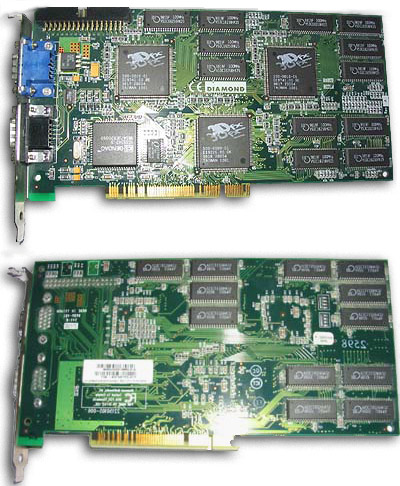
Reading The NVIDIA Way is a throwback. In the late 1990s, I followed graphics card launches with the kind of attention most people reserve for sports scores. 3dfx, S3, Matrox, ATI. Brands that have long since disappeared, or been absorbed, or faded into irrelevance. Cards that felt legendary at the time: the Voodoo, the Voodoo2, the Banshee. The wars were real, the stakes felt enormous, and the gap between generations was wide enough that an upgrade genuinely transformed what your computer could do.
Most of those companies are gone. NVIDIA now sits at roughly the $5.35 trillion mark.
Tae Kim’s book explains why, and it has almost nothing to do with having better hardware. What turned NVIDIA into what it is today was how they chose to operate. NVIDIA’s first chips were manufactured by SGS-Thomson near Grenoble, France, which is a fun footnote. But the lessons that matter were built in Santa Clara. Reading the book left me with eight of them that I keep coming back to.
1. Ship it. Then ship the next one.
In the late 1990s, 3dfx had better hardware than NVIDIA. Their chips were technically superior. They still lost.
Ross Smith, 3dfx’s marketing executive, summarised the autopsy years later: “Wanted perfection in every product that we shipped.” The Voodoo3 was meant to be a stopgap while Napalm and Rampage were in development. It slipped to April 1999. Napalm and Rampage slipped further.
Jensen had restructured NVIDIA’s engineering into three parallel teams: one designing the new architecture, two developing faster derivatives of the previous one. A new chip every six months, aligned with OEM refresh cycles. “The competition will always be shooting behind the duck.” 3dfx was aiming at where NVIDIA was. NVIDIA was already building what came next.
The lesson isn’t “don’t care about quality.” It’s that perfectionism at the expense of cadence is a slow way to lose. The market doesn’t wait for the definitive version.
2. Software is part of the chip.
Most semiconductor companies treat hardware and software as sequential phases. The chip ships, then the driver team gets to work. NVIDIA inverted this.
By the time a chip came off the production line, drivers had already been tested across every relevant application and verified for backwards compatibility with prior generations. Day-one support, zero integration friction for OEMs, and developers who could rely on the ecosystem working from the start.
The compounding effect was significant: even if a competitor offered a marginally better chip, there was no incentive to switch when a faster NVIDIA part would arrive in six months, without the hassle of new drivers. The advantage wasn’t only in the silicon. It was in the layer that made the silicon usable.
3. The market will tell you what to build, if you listen.
In 2002, Mark Harris was a PhD student at the University of North Carolina trying to simulate atmospheric clouds. He noticed that researchers were getting massive speedups by running simulations on NVIDIA GeForce 3 cards, essentially hacking graphics hardware to do general computation. He coined the term GPGPU, built a website, and the community grew.
NVIDIA didn’t create GPGPU. Academics did, by torturing cards designed for games into doing physics simulations. Jensen and Bill Dally were already thinking about parallel computing. When they saw what was happening outside the company, they listened, and eventually hired the person who had invented the acronym, who discovered it was already jargon internally.
That listening became CUDA in 2006: a programming model that made the GPU a proper general-purpose parallel processor, accessible to any developer without having to reframe their code as a graphics problem. CUDA lowered the barrier from “hack” to “tool.” Research adopted it, then machine learning adopted it, and by the time the deep learning boom arrived in the early 2010s and exploded into today’s AI era, the infrastructure was already in place. Training a large language model requires exactly the kind of massively parallel floating-point computation that GPUs were already the world’s best hardware for, because NVIDIA had spent a decade building the software stack to go with the silicon.
The AI boom didn’t happen to NVIDIA. NVIDIA built the foundation years before anyone knew what it would be used for. Much of that trajectory traces back to a PhD thesis about clouds, not to an internal roadmap. When users bend a product towards a use it wasn’t designed for, that’s the market talking. It’s worth finding out who’s doing the hacking and what they’re publishing.
4. “It’s our architecture.”
During the development of one chip generation, Curtis Priem, co-founder and chief architect of NVIDIA’s early chips, found a flaw in the architecture. He fixed it, pulled the documentation from the shared server, and replaced it with the updated version. No announcement. This was how he had always operated.
The software team went haywire. Jensen intervened. In the heated argument that followed, Priem insisted he could do whatever he wanted because he had personally designed the architecture. “It was my architecture,” he kept repeating.
Jensen’s response: “No, it’s our architecture. You didn’t do it. We did it. You don’t own those files.”
He made Priem restore the original documentation and complete the software work with the old files. The architectural fix went through the normal process the following year.
The cultural signal here is precise: the moment a team depends on a piece of work, that work becomes collective property, regardless of who built it, including founders. Priem later noted that Jensen described the outcomes of important business trips using “we,” never “I.” “What’s this ‘we’ stuff? I don’t know anything about negotiating contracts with fabs. But Jensen was right. We all did it together.”
5. Give a bluecoat your pork chop.
During a chip production crisis, NVIDIA brought in hundreds of contract testers, known internally as “bluecoats,” to work through batches of suspect components. The work was unglamorous: shift work, repetitive testing, no equity. They also ate the free snacks.
NVIDIA engineers complained. Jensen’s response was a company-wide email with the subject line: “Give a bluecoat your pork chop.” If the testers wanted the main course from your lunch plate, hand it over.
Jensen, who had worked his way through school cleaning bathrooms and waiting tables at Denny’s, had no patience for the implicit hierarchy that ranks operational work below engineering work. The bluecoats were doing work that mattered more to the company’s survival than the discomfort of running low on free food. He said so, directly and to the whole company.
Gratitude isn’t a disposition. It’s a behavior. You hand over the pork chop.
6. Strategy is action. Success is suspect.
After an exceptional quarter, one where NVIDIA had, as Jensen put it, “blown the doors off,” Jensen stood up in front of the team for the quarterly review and opened with: “I look in the mirror every morning and say, you suck.”
The timing matters. He didn’t say this after a difficult quarter. He said it after the best one, precisely the moment when complacency becomes the real risk. This wasn’t self-flagellation for its own sake; it was a deliberate cultural device. Success is not a reason to stop questioning whether what you’re doing is good enough. Don’t be too proud of the past. It’s the same posture that made the six-month cadence sustainable over decades, not just a few cycles.
The same anti-complacency logic shows up in how NVIDIA plans. There isn’t a five-year plan. Jensen is explicit: “Strategy is action. We don’t do a periodic planning system. The reason for that is because the world is a living, breathing thing. We just plan continuously. There’s no five-year plan.”
Without a fixed plan, what maintains alignment is the mission itself: not the hierarchy above you, not the document from last year’s offsite. You make decisions for the good of the customer, not to serve the executive above you. This resolves the apparent paradox of autonomous teams operating without chaos: the mission is the shared reference, and strategy is what each team does today against the actual state of the market.
7. What is the speed of light for this?
One phrase recurs throughout the book, in different contexts and at different stages of the company: speed of light. Jensen used it as a question. What is the speed of light for this process? Meaning: if we removed every source of friction, delay, and unnecessary work, what’s the theoretical minimum time this could take? Then: how far are we from that?
It’s a demanding mental model. Most teams optimise against their own historical performance or against the competition. Jensen was optimising against physics. The gap between where you are and the speed of light is the waste still to be removed. The question doesn’t accept “good enough” as an answer, because the speed of light is always the same.
You can hear it running underneath every lesson in this list. Six months per chip: what is the speed of light for a chip cycle? Drivers ready on day one: what is the speed of light for software readiness? Continuous planning: what is the speed of light for a strategic decision? Each lesson above is, in some way, NVIDIA’s answer to that question in a specific domain.
8. The question the book doesn’t fully answer

Reading about Jensen, the comparison to Steve Jobs is hard to avoid. Both are founder-CEOs who didn’t just run their companies but defined them: their taste, their pace, their culture. The products and the operating model are inseparable from the person. Apple without Jobs stumbled badly, then found its footing again when he returned. After Jobs died, Apple managed a remarkably successful transition under Tim Cook, but it took years, and the question of whether Apple’s most innovative era ended with Jobs is still open.
Arguably, NVIDIA today is more Jensen-dependent than Apple was on Jobs at its peak. Every lesson in this post, the cadence, the “speed of light” question, the “you suck” mirror, the pork chop email, the collective ownership, the refusal of five-year plans, runs through Jensen personally. He is not just the CEO. He is, in a meaningful sense, the operating system. The culture is him.
Apple had the advantage of hardware product lines and an ecosystem that could carry momentum for years without a visionary at the helm. NVIDIA’s position in AI infrastructure requires continuous bets at the frontier, sustained paranoia about complacency, and the kind of judgment that turned a GPGPU hack into CUDA into a trillion-dollar platform. That judgment has been Jensen’s.
The book was written while Jensen is still very much at the wheel. It is, perhaps inevitably, a celebration. The harder question, what happens to the culture, the cadence, the paranoia, when he is gone, is one that Tae Kim doesn’t need to answer yet. But it’s the one I kept thinking about.
The pattern underneath
The NVIDIA story is often told as a story about GPUs, AI, and timing. Those aren’t wrong. But reading Kim’s book, what comes through more clearly is the operational discipline underneath: cadence over perfection, software as part of the product, listening to the market instead of dictating to it, collective ownership, gratitude as action, sustained self-criticism, and strategy as a continuous act rather than a periodic document.
Reading notes from The NVIDIA Way: Jensen Huang and the Making of a Tech Giant (Tae Kim, 2024).